Caribou at The Fillmore // Photo by Justin Yee
Noise Pop //
Bay Area venues – San Francisco & Oakland
February 20th-March 1st, 2015 //
2015 marked the Bay Area’s 23rd annual celebration of independent music, art, film and more, affectionately known as Noise Pop. Running 12 full days and taking place at more than 20 different venues throughout SF and the East Bay, this marathon party is best described as the West Coast version of South by Southwest.
Each year, Noise Pop highlights both the biggest stars within the independent music and art industries as well as emerging artists performing at the peak of their games and has always been ahead of the curve when it comes to booking their acts — and this year was no exception. Curating a demographic of music fans with limitless knowledge, expectations and preferential ranges, this festival never fails to create some of the most memorable experiences in live entertainment throughout the Bay Area.
Noise Pop remains one of our favorite times of the year, not only for its amazing lineups and exceptional performances, but also for its genuine ability to bring music and lifestyle connoisseurs from across the globe to extrapolate, communicate and participate in the independent culture of the Bay Area.
Here are some of our favorite moments from Noise Pop 2015.
Most Likely to Have a Hospital Bill: Ben Gibbard
Gibbard enlisted Sun Kill Moon’s Mark Kozelek to play guitar for him after breaking his wrist before his big opening night performance at the Swedish American Music Hall. We’re still surprised the notorious shit talker (Kozelek) didn’t give Gibbard a harder time about it, considering the last song off Kozelek’s Benji is titled “Ben’s My Friend” and is about how Kozelek went to the Greek Theatre in Berkeley to watch Gibbard play with The Postal Service before proceeding to have a mental breakdown.
Runner-up: PPL MVR
This second-place honor goes to SNWBLL after the band had to cancel its performance at Bottom of the Hill due to some unfortunate bladder issues.
Tonights PPL MVR show has been cancelled. SNWBLL of @pplmvr is ill passing a giant kidney stone and cannot perform. Get well SNWBLL!
— Noise Pop (@noisepop) February 25, 2015

Most Likely to Inspire 2015 Festival Fashion: The Black Ryder
Dark, brooding and beautifully tragic. Beyond the torrid love affair story and musical diatribe to accompany the duo of Aimee Nash and Scott Van Ryper, the band embodies its self-proclaimed “Rhinestone Drone” sound into a wicked wardrobe, guaranteed to materialize on the proverbial polo fields across the nation this summer.
Runner-up: Bestie
The Vancouver outfit brought some creativity to the merch table with fun and functional band gear, such as koozies and friendship bracelets, as you can see here via Instagram.
https://instagram.com/p/zjwd2OJ5-G/

Most Bar-Raising Performance of the Festival: Kindness
“(Adam) Bainbridge grabbed one audience member’s cell phone out of its hands and filmed himself as well as the crowd with it at one point, elevating the crowd-interaction a notch. He sang from on top of the bar at stage left, walked into the crowd with his mic and made a huge lap while singing to individuals in the audience to end the night.”

Act Most Likely to Prompt a Mind-Altering Freak Out: Dan Deacon
“Layer upon insane layer of sound interprets into harmonious infectiousness, a feat that hints at an intersection of mathematical and creative genius. The guy takes all sorts of frequencies and cross sections of genre elements and composes it all together into a crescendo of weird, atypical pop. And by weird, I mean the very good kind of weird.”
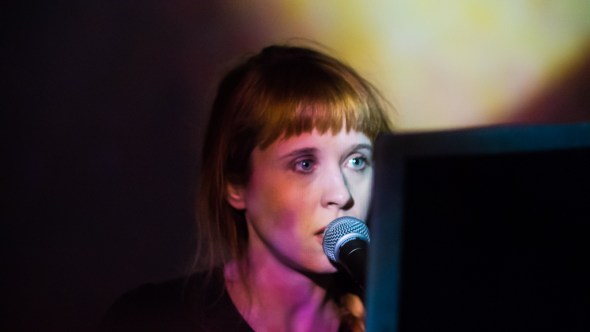
Runner-up: Holly Herndon
“People laughed nervously as a slow burn of glitch sounds began to emerge, and before you knew it, her browsing gave way to an interactive, virtual world featuring two-dimensional cutouts of people floating about while strategically-placed cameras around the room recorded and projected images of the crowd, usually catching them unexpectedly on their phones, on two adjacent screens.”

Most Entertaining Attempt at a Cover Song: Surfer Blood
These guys covered “Hey Sandy” by Polaris, aka the theme song for “The Adventures of Pete & Pete.”
Runner-up: Girrafage‘s rendition of Miley Cyrus’ “Party in the USA”

Most Likely to Be Headlining Future Festivals: Caribou
Absolutely destroying two back-to-back, sold-out nights at The Fillmore, Caribou’s live show is currently on a world tour, hitting all of the largest festival stages in its wake. We unanimously believe that this act will be one of the biggest of 2015 and are keeping our fingers crossed that they will be filling the empty spot in their August tour schedule with a stop at this year’s Outside Lands Music Festival.

Runner-up: Flight Facilities
“… to consider booking this lineup on a ‘school night’ at a venue with a max capacity of 1,424 people was a pretty bold call. Subsequently though, it was also one that paid off in easily the largest dance party of the festival.”

Most Likely to Break the “Local Music” Barrier: Les Sins
“Intermingling his own material with disco classics, 90’s pop jams and dirty trap beats, Bundick had the crowd on fire and easily could have prolonged the party well into the after hours had there been the option to do so.”

Runner-up: Geographer
With a doctored lineup and powerful new songwriting approach, Mike Deni has taken full reign of the band’s beloved history of material and is moving forward into bold, uncharted territory — a leap of faith that just might cover the extra ground needed to penetrate a mainstream audience.


 Written by
 See any Noise Pop show or event of your choosing


 By
By  So often sequels don’t deliver, but ascending hip-hop stars Killer Mike and El-P have simply progressed their brilliance as Run The Jewels one year removed from their first official collaboration. From the top of RTJ2, Michael Render manages to set a higher bar for pumped-up aggression, there’s more social activism laced throughout, more special guests that only add to the fuck boy-crushing populist mentality. And compared to RTJ1, there are more stand-alone gems that are primed for remixing and cultural integration. The sequencing is superb, and El and Mike are having more fun than ever as they tour the world and snowball momentum with their brand of hardcore, yet intricate rap that contains shades of weird. Like a championship baseball team, the songs in the two hole through cleanup hitter offer the biggest impact, wreaking instant classics upon us with masterful experimental production from El-P that emits new, subtle surprises the more you listen. As the album unfolds, tales of police brutality (“Early”), introspection and personal improvement (“Crown”), along with over the top raunch (“Love Again”) prove RTJ2 shines in every moment in a variety of ways through multiple lanes of success. -Mike Frash
 When a truly inspired artist borrows from the past while looking to the future, the outcome can be something fully new and exciting, which is what we have here. The brilliance of Adam Granduciel lies in his delivery, both musically and lyrically, crooning about the sometimes-not-so-simple intricacies of existence. Life, love and everything else in between can be tricky, yet Granduciel calmly assures us that things can work out.
 There’s an intentional off-kilter spontaneity and cohesive force at the center of D’Angelo’s first album in 15 years, Black Messiah. The percussive and vocal syncopation here makes the off-beat feel natural — layered vocals get treated with filters and are multi-tracked to lend an unfamiliar presence to the back-and-forth vocal pitch shifts D’Angelo employs from line to line.
 Singles jumps right out of the gates, showing its cards early, presenting the listener with Future Island’s trademark new-school, new-wave sound. Samuel Herring’s vocals are stunning as he pitches and growls through tales of the tougher side of love. It’s pretty, gripping and powerful while also holding certain pop sentiments, lending to an overall lightness while being arresting. “Seasons (Waiting On You)” is a quintessential slice of the emotion this band has become well known for both onstage and in the studio. “Doves” balances all the elements nicely, shining a light on the top-notch production featured on Singles. -KQ
 Richard D. James has been practically an enigma for the last decade plus, hiding out in a small Scottish village of 300 and releasing no new music as Aphex Twin since 2006. But the long layoff hasn’t changed the fact that he remains one of the most unique and influential electronic producers in the game today. Some of James’ best material on Syro comes early on, from his club-oriented mixes like “minipops 67 [120.2]” to the techno funk he crafts on the ensuing “XMAS_EVET10 [120]” and “produk 29 [101].” These aren’t beats designed to make you sweat your ass off — if anything, the cerebral nature of James’ work makes him the ultimate antithesis of the current EDM scene. -Josh Herwitt
  On Flying Lotus’s latest record You’re Dead!, the Los Angeles producer forgoes the acid kool-aide test for a cyanide kool-aide dive straight into a fourth dimensional confrontation with the afterlife. You’re Dead masterfully trips through the journey of the soul into the next episode with sun-scorched psychedelia, 8-bit snapshots of g-funk and gorgeously redemptive jazz. The cold transition between the frantic jazz freak out of Kendrick Lamar featuring “Never Catch Me” and the cooled-out West Coast bounce of Snoop Dogg and FlyLo alter-ego Captain Murphy’s “Dead Man’s Tetris” highlights the producer’s prolific ability to craft varying hip-hop textures. FlyLo fully buries his new album’s death aesthetic through ecstatic, free-form layers of acid jazz and sprawling EDM planes of sound. -John Venanzi, Community Review
 Annie Clark ups the electronic ante on her fourth studio album. Branching out of her experimental indie-pop compositions, she embraces more cohesive arrangements that ironically focus her creativity on deconstructed production and sound obstruction. Both equally impressive in sound quality and sass, the opening tracks “Rattlesnake” and “Birth in Reverse” set the tone for the rest of the records’ exciting stylistic shifts and the intriguing unveiling of Clark’s gritty rock goddess persona. “Digital Witness” is a spot-on snapshot of our brave new 21st century day-to-day reality. Unapologetic, raw and sonically genius, St. Vincent is Clark’s breakthrough moment, and she appears to be doing it all with ease. -Molly Kish
 Mac DeMarco’s signature style is here. It’s still fresh and in ways stronger than ever; it’s more pointed, focused and accessible. DeMarco is able to write in a way that allows the listener to easily empathize with him, as he turns his issues into ones that most of us have dealt with at some point. In “Chamber of Reflection”, it’s easy to really feel a sense of solitude. “Goodbye Weekend” sounds like a stoney Sunday afternoon coming to a soothing end. Every track has a personality of its own while holding up the overall ethos of the album. This album is lighthearted enough for multiples listens in a row with its breezy beach vibe, but also easily induces deep thoughts with its many lyrical gems. -Steve Wandrey
 What we have here is one of the most addictive albums of 2014. Our Love keeps deep house in its front pocket with steady beats per minute and an introspective mantra-centric lyrical conceit, but it’s also exploratory in nature, finding success in consistently building toward intense, euphoric plateaus. A steady flow of pleasant sounds ascend into impacting transcendence with “Can’t Do Without You”, “Silver” and “Your Love Will Set You Free”, and you must give Snaith extra credit for the masterful pacing and song-to-song flow — there is never a “skip ahead” moment. Like many classic albums, it opens up if you give it more time to radiate around your head, and listening to it becomes more pleasurable over time, even though it is mostly presented in poetic simplicity. -MF
 Benji must be interpreted as a concept album about death, but more importantly, it’s about the importance details related to memory. For example, the title is taken from what seems like a throw-away line toward the end of the breathtaking “Micheline”. It’s powerful, visceral storytelling that is self-reflexive and biographical, yet so relatable that it compels personal introspection from the listener’s own experiences. Mark Kozelek’s lyrics are the centerpiece of the listening experience — they are so deep and resonant that the instrumentals and production are absorbed secondarily, although the stripped-down approach is intentional and noteworthy. Built around obsessing about the state of human demise — and the randomness of it — it’s easy to join Kozelek’s dire state of mind hours or days after listening. -MF


 Written by